Using Indiana Planting Ranges to Plan Successive Garden Harvests
Indiana planting calendars often offer date ranges rather than a single day, which can make it hard to plan a steady supply of vegetables. The useful question is not only when a crop can go in, but how to stagger plantings so harvests overlap without creating more produce than you can use.
What planting ranges mean for succession planting
A planting range is a window for sowing or transplanting a crop, not a promise that every day in that window will suit every garden. Indiana weather shifts from season to season, and conditions can differ between regions and even between nearby yards. A range gives you room to adapt rather than tying the whole garden to one calendar date.
Purdue University Cooperative Extension Service lists the Indiana vegetable planting calendar as publication HO-186-W. Use a calendar like this as a planning reference: it can help you identify the general windows for crops, while local weather, soil condition, crop type and your own goals shape the final decision.
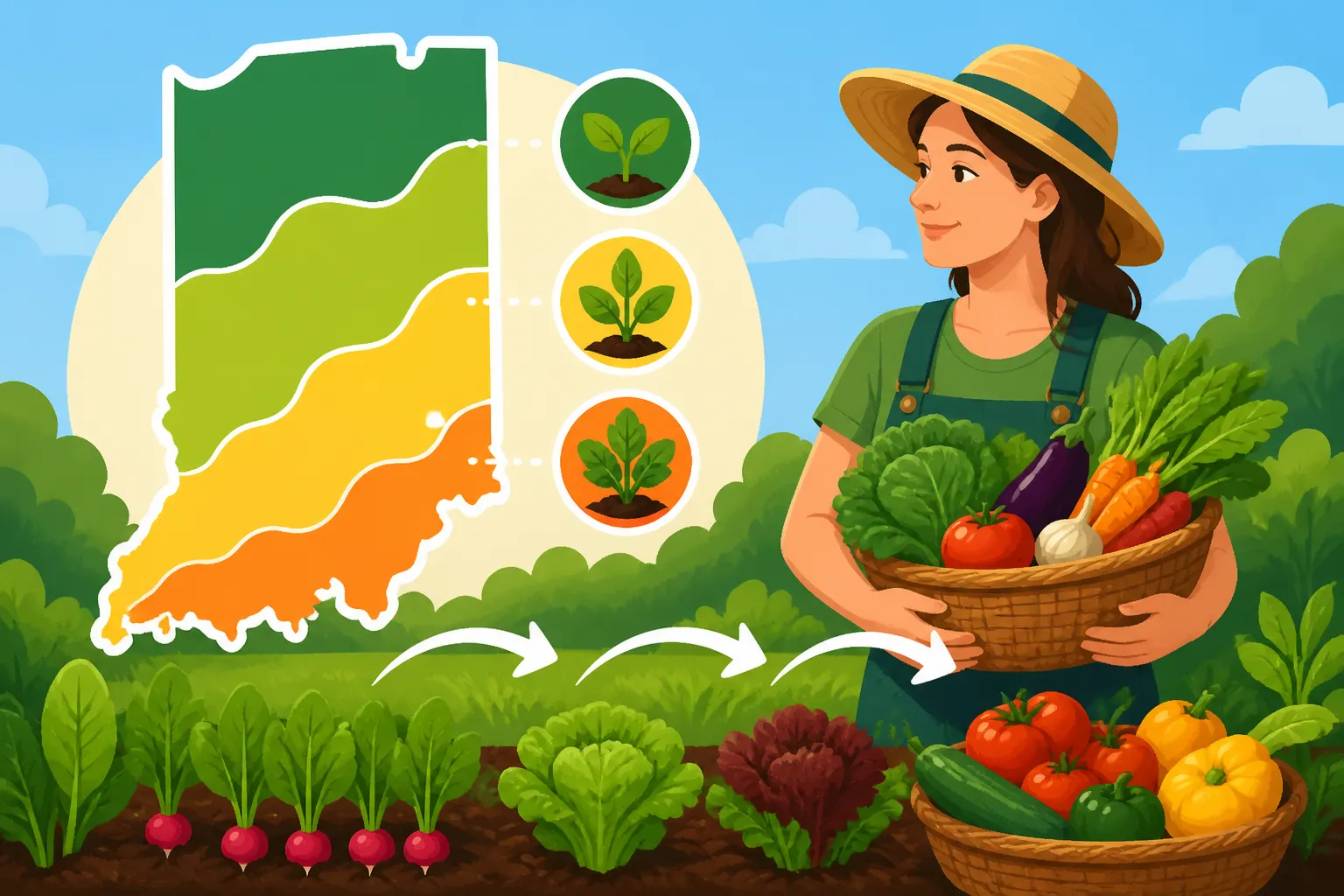
Succession planting means making planned sowings or plantings at intervals so crops mature at different times. It can also mean following an early crop with a different one after harvest. Both approaches spread the work and harvest instead of putting every plant in the ground at once and hoping the resulting flush fits your kitchen.
The idea is simple, but successful timing takes more than repeating a sowing on a fixed schedule. A new planting needs enough suitable growing weather to mature. Some crops tolerate cool conditions; others need warmer soil and nights. And a crop’s usable harvest may be brief or extended, depending on what you grow and how you pick it.
Think of the planting range as a planning envelope. Within it, choose a start that fits your garden’s current conditions, then decide whether another sowing makes sense. If the range is closing, a crop may still be a poor choice if the remaining season does not suit its growth needs. If weather is unusually cold or wet, waiting for a workable bed may be wiser than planting just because a calendar window has opened.
A succession plan can use several patterns:
- Sow the same quick-growing crop in separate batches, so each planting reaches harvest at a different time.
- Plant a crop with a long picking period, then add a later planting if the season and bed space allow.
- Follow an early crop with another crop that fits the remaining growing conditions.
- Mix crops with different harvest periods so the garden does not depend on one large harvest arriving all at once.
These patterns are not interchangeable for every vegetable. A crop that is usually harvested young may suit repeat sowing, while a crop that occupies a bed for a long time may be better planned as a single planting or as part of a crop rotation. The first step is to identify what you want from the bed: a continuous supply, a concentrated harvest for preserving, or a mixture.
For a calendar-based overview of regional timing, see The Indiana Vegetable Planting Schedule: Purdue Extension Timelines. To connect the planting window with local spring and fall conditions, Indiana Regional Frost Dates: North, Central, and South Guides can help explain why a range should not be treated as a fixed statewide date.
Choose crops and harvest patterns before setting dates
The best succession plan starts with the harvest, not the seed packet. Ask what you actually want to pick, when you expect to use it and how much space you can keep in production. A tidy schedule that produces more than your household can eat is not a successful schedule.
Match the planting pattern to the crop
Some vegetables are convenient to sow in separate batches because they reach a usable stage relatively quickly. Salad greens and radishes are familiar examples. Rather than sowing the entire bed at once, you can reserve part of the space for a later sowing. That can make harvests less concentrated, though hot weather, dry soil or pests can still affect the result.
Other crops provide an extended harvest from one planting. Beans, cucumbers and summer squash may be picked repeatedly while plants continue producing. A second planting can extend the season, but only if there is enough remaining time and healthy space for it. If the first planting is already producing more than you can use, adding another may make the glut worse.
Crops harvested as a single mature head, root or plant often need a different strategy. You might sow a portion of a bed, then sow another portion later, rather than filling the entire bed at once. That approach can work well when the crop has a suitable planting window and you can keep the later planting watered and protected through establishment.
Long-season crops can occupy a bed for much of the available growing period. They may not be the easiest candidates for repeated sowing in the same place. For these, plan the bed’s whole season in advance: decide whether the crop is the main planting, whether it will share space with a compatible short-term crop, or whether another bed will provide later harvests.
Consider how you will use the harvest
A steady trickle of produce is useful for fresh meals, but preserving often calls for a larger, more concentrated harvest. A succession schedule can be built toward either outcome. If you want fresh greens throughout the season, separate sowings can help. If you want enough tomatoes for a large canning session, a concentrated planting may suit your purpose better than spreading the crop widely across the season.
Household habits matter as much as crop biology. If you tend to cook with herbs or greens every week, small repeated harvests can be practical. If you have limited time for picking, a large planting that ripens at once may be difficult to manage. Think about the time needed to harvest and prepare produce, not only the space needed to grow it.
It also helps to distinguish between a harvest you can use and a harvest that looks impressive in the garden. A bed filled with one crop may be productive, but if it ripens all at once and cannot be eaten or stored, the planting did not meet your needs. Using Days to Maturity to Schedule Your Indiana Harvest can help you think through the relationship between crop timing and your intended picking period.
Make a short crop list
Before drawing a bed plan, list the vegetables you want, the form in which you will harvest them and whether you want a brief or extended picking period. Then mark which crops you are willing to sow more than once. Keep this list realistic: every additional planting creates work for watering, weeding, monitoring and harvesting.
For a useful starting list, separate crops into broad groups:
- Crops you want in repeated small harvests.
- Crops you want in a concentrated harvest.
- Crops that can keep producing over an extended period.
- Crops that can follow an earlier planting when the bed is cleared.
This simple grouping makes a calendar easier to use. You are no longer trying to plant everything whenever a window appears. Instead, you are choosing which crop will occupy each bed, what harvest pattern you want and whether another planting is worth the space.
Build a succession schedule from the planting range
A planting range becomes useful when you turn it into a sequence of decisions. You do not need a complicated spreadsheet. A notebook, a bed sketch or a simple calendar can capture the important information: what is planted, what is expected to come out, what might go in next and what conditions need to be checked first.
Start with the earliest realistic planting
For each crop, find its planting window in the calendar you are using. Then compare that window with the conditions in your garden. Is the soil workable, or is it wet and compacted? Is the bed exposed to cold wind or sheltered? Does the crop suit the weather you are likely to have? The earliest possible date is not automatically the best date for your particular bed.
When a range begins, you can treat its opening as an opportunity to assess conditions rather than a signal to plant immediately. If the soil is cold, soggy or difficult to work, a delay may support better establishment. If conditions are favorable and the crop tolerates them, planting earlier in the window may give it more time to grow.
This decision is especially important in spring, when a warm spell can be followed by chilly weather. A warm afternoon does not tell you everything about the conditions a newly sown or transplanted crop will face. If the weather has turned variable, use What Vegetables to Plant Now in Indiana When Spring Weather Shifts to think through how to respond without treating the calendar as a guarantee.
Decide whether a second planting has room to succeed
A follow-up sowing needs more than an empty space. It needs suitable conditions for germination and growth, enough time to reach harvest and a place where it will not be shaded or crowded by the earlier planting. Before sowing, look at the remaining space in the bed and ask how much time the crop is likely to need.
The planting range helps you see when another sowing might be possible, but it does not mean every sowing within the range will produce equally well. A later planting may face hotter weather, drying soil, heavier pest pressure or a shorter period for growth before cold returns. Be selective: a smaller, well-timed sowing may be more useful than filling the bed simply because there is room.
Use a harvest note to make future decisions easier. Write down when a sowing went in, how it grew, when you began picking and whether the amount was manageable. These observations can help you decide whether to repeat the same interval next season or adjust it. Keep notes about conditions too. A crop that struggled in a wet spring may do well in a more favorable season.
Leave space for the next crop
If a bed is part of a seasonal sequence, plan the next planting before the current crop fills the space. This does not mean removing a healthy crop too early. It means anticipating when the bed might open and identifying a suitable follow-up that can use the remaining season.
A practical bed plan might reserve one section for an early crop and another for a later one. Once the first section is harvested, you can use it for a different crop if the planting window and conditions still fit. The benefit is flexibility: the whole garden is not committed to one sowing date, and one delayed bed does not necessarily delay every harvest.
Avoid assuming that a crop will be ready to come out on a precise date. Growth can speed up or slow down with weather and other conditions. Treat the next planting as a planned possibility, then reassess when the bed is actually available. If the crop is still producing well, decide whether the benefit of keeping it outweighs the value of making room for the next crop.
For help thinking about staggered sowings across suitable windows, see Staggering Indiana Vegetable Sowings Across Planting Windows. If you prefer a less complicated approach, Planting Midway in Suggested Windows for Single Sowing Success offers a way to choose a central point in a planting period rather than trying to manage repeated sowings.
Adapt planting ranges to Indiana weather and your garden
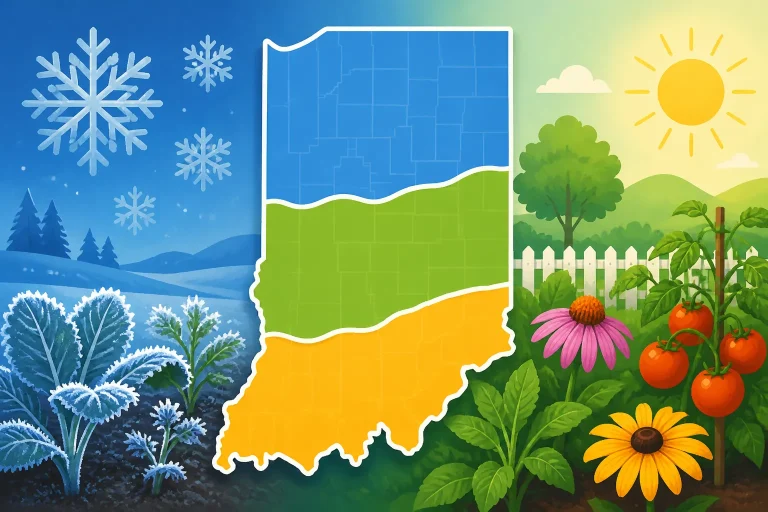
Indiana is not one uniform growing environment. Local weather, exposure, elevation, nearby water, soil and the shape of a yard can affect how quickly a bed warms, how long it stays wet and how exposed plants are to wind. A statewide planting range can orient your decisions, but it cannot describe every garden.
Use frost guidance as context, not a guarantee
Frost information can help you assess risk, but a typical or average date is not a promise about the weather in a particular year. A low-lying bed may collect cold air while a sheltered spot remains milder. A location near a large body of water may have a different pattern from an inland garden. Even in one yard, exposed beds and protected beds can behave differently.
For tender crops, do not rely on the calendar alone. Consider the forecast, the crop’s tolerance and whether you can protect plants if conditions turn cold. For crops that tolerate cool weather, the calculation may be different, but saturated soil or a sudden cold snap can still affect establishment. Why Hardiness Zones Do Not Set Indiana Vegetable Planting Dates explains why a plant’s winter hardiness rating is not a substitute for seasonal planting guidance.
Frost guidance is most useful when paired with crop needs. A frost-sensitive crop may need to wait until cold risk has eased, while a cool-season crop may be suited to an earlier window. That difference is one reason garden plans benefit from grouping vegetables by temperature preference instead of treating every seed packet as if it shared the same schedule.
Watch the bed, not only the calendar
Before sowing, check whether the soil is workable. If it clumps, smears or sticks heavily to tools, working it may damage its structure. If the surface is dry but the bed is still wet below, a little patience can help avoid compaction. A crop planted into a poorly prepared bed may have a harder start than one planted later into better conditions.
Soil warmth matters too. A bed may be technically available for planting while still being cool for a crop that prefers warmer conditions. Dark, exposed soil can warm differently from shaded or mulched ground. A simple soil thermometer can give you more information than air temperature alone. For a deeper look at that decision, see How Soil Temperature Changes Your Spring Planting Schedule and Using Soil Thermometers to Time Indiana Vegetable Planting.
Water is another practical constraint. A succession sowing needs steady moisture while seeds germinate and young plants establish. In a dry stretch, a later sowing may demand more attention than an earlier one. If you cannot keep the bed adequately watered, reduce the size of the planting or wait for more favorable conditions. Avoid making a planting that will be difficult to maintain simply because the calendar shows an open window.
Keep a record of local differences
Over time, notes can show that a particular corner of the garden warms early, drains slowly or suffers from cold air. Use those observations to adjust future plans, but do not assume every year will repeat the last one. The notes are a guide to your site, not a substitute for current conditions.
Record practical details such as:
- The crop and where it was planted.
- Whether it was direct-sown or transplanted.
- The soil and weather conditions at planting.
- When the bed became available again.
- Whether harvests arrived too close together or too far apart.
- Any difficulty with weeds, pests, drying or excess moisture.
These details help distinguish a poor schedule from a difficult growing season. If a later sowing failed because it did not get enough water, changing the interval may not solve the problem. If harvests overlapped too much, spacing plantings differently could be useful. If a crop never had enough time to mature, the issue may be that the window was too late for that crop and location.
Fit succession planting into bed space and crop turnover
Succession planting is as much about space as timing. A plan that looks sound on paper can fail when the earlier crop remains in the bed longer than expected or the next crop is crowded by plants still producing. Leave enough flexibility for real growth and harvesting.
Plan around the bed’s full season
For each bed, identify the main crop and possible follow-up. A simple sequence can be more dependable than trying to fit several crops into every opening. Consider how long the first crop is likely to occupy the bed, what condition the soil may be in when it comes out and whether the next crop is appropriate for the season that remains.
If the next crop will be started indoors, account for the time needed to raise and harden off the transplants. If it will be direct-sown, make sure the soil and weather suit germination. Do not assume that a transplant and a direct-sown crop use the same planting window. Their route into the bed differs, even if their eventual growing conditions are similar.
A bed can also support partial succession. You might harvest one section while another remains occupied, then replant the cleared area. This avoids waiting for the whole bed to finish. It can also reduce the risk of having no harvest if one planting is delayed. The trade-off is that newly sown plants may need more careful watering and weeding among established crops.
Avoid crowding new and established plants
A young follow-up crop can struggle if established plants cast shade, compete for moisture or make it difficult to reach the bed. Before sowing into a partly occupied space, look at how large the existing plants have become and how much room remains. Make sure you can harvest without trampling new growth or damaging the older planting.
Also consider the root and canopy habits of the crops involved. Tall plants can shade shorter ones; sprawling plants can cover a large area; dense leaves can make a bed harder to inspect. Arrange crops so the follow-up has a realistic chance to grow, not merely a patch of visible soil.
If a crop has finished, remove spent plants and clear debris before preparing the next planting. Healthy plant material may be suitable for composting, while material with signs of serious disease or pests may need a different approach. The right choice depends on the problem and local recommendations. Keep the bed tidy enough to inspect, but avoid disturbing soil unnecessarily.
Think through rotation and plant health
Repeating a crop in the same bed can be convenient, but it may not be the best choice every time. Different crops draw on soil resources in different ways and can share pest or disease problems. A succession plan should consider what occupied the bed before, not only what will fit next.
Rotating plant families can reduce the chance of repeatedly giving the same pests or diseases a familiar host in the same spot. Rotation is not a cure-all, and small gardens may have limited options. Even so, a simple bed record helps you avoid repeating the same crop in the same space by accident.
Clean tools and healthy transplants also matter. A succession plan can spread risk by avoiding one large planting, but it cannot compensate for poor seed, unsuitable conditions or a disease problem that carries over in the bed. Check plants as they establish and respond to symptoms before adding more of the same crop.
For help with bed design and soil constraints, Raised Beds vs In-Ground Gardening in Indiana Soils can help you compare growing spaces. If soil preparation is the main barrier to using a bed again, Improving Poor Indiana Soil: Amendments, Drainage, and Bed Prep covers the considerations that come before planting.
Manage fall succession without overestimating the season
Late-season sowing can extend harvests, but it requires careful planning. The calendar window may be open while the remaining conditions are less forgiving. Soil can dry quickly in summer heat, seeds may need consistent moisture, and a crop started late may not reach a useful harvest before colder weather arrives.
Start by working backward from the harvest you want. Consider the crop’s expected growth period, the conditions it needs to establish and the time it will have to mature. Seed-packet maturity information can help with planning, but it is not a guarantee. Weather, soil, water and plant health can all affect how quickly a crop develops. For practical timing, see When to Plant Fall Vegetables in Indiana for Late-Season Harvest.
Fall crops are often started while other vegetables are still occupying the garden. That means planning may involve a separate seed bed, containers for transplants or a reserved patch that will be available later. If you wait until the first bed is empty to begin thinking about the next crop, the follow-up planting may be delayed.
Prepare for heat and dry soil
A late-summer planting may need more attentive watering than a spring sowing. Surface soil can dry before seeds germinate, and newly emerged seedlings have limited roots. A small planting area is easier to monitor and water than a large bed filled with seeds all at once.
Keep the soil evenly moist while seeds establish, without leaving it waterlogged. A light cover can help reduce moisture loss or protect seedlings, but it should not trap excessive heat or prevent the crop from growing well. Check the bed rather than assuming that a recent rain or watering reached the seed zone. Irrigating Late-Summer Sown Crops to Beat Indiana August Drought explores the moisture challenge of late-season sowing.
Choose the crop and planting size with the available care in mind. If the weather is hot and you expect to be away or unable to water, postpone or reduce the sowing rather than risking a large planting that may fail unevenly. If conditions improve, you can make another decision then.
Do not make a late planting out of habit
A repeated sowing is useful only if it has a plausible route to harvest. A calendar can show a potential window, but the later planting may still be a poor fit if the crop needs more favorable conditions than the season can provide. This is particularly important when a crop is slow to establish or needs a long period before harvest.
Look at the remaining growing conditions and choose crops accordingly. Some cool-season vegetables may suit a fall plan better than heat-loving crops, while some warm-season crops need enough warmth to finish well. Do not assume that a crop that performed well in spring will behave the same way in late summer.
If a succession is too late, there are still useful choices: maintain the existing crops, improve the bed for a future planting, or use a crop better matched to the remaining season. Planning an Indiana Fall Vegetable Garden: Purdue Sowing Dates and Is It Too Late to Start a Fall Vegetable Garden in Indiana? can help frame those decisions without treating a single date as a statewide guarantee.
Keep the plan flexible and learn from each harvest
A succession calendar is a working plan, not a contract. Weather may delay planting, a crop may mature sooner than expected, or a bed may remain occupied longer than planned. Adjusting the schedule is not a failure. It is the practical response to conditions that a calendar cannot predict.
Use simple checkpoints
At each planting, ask whether the bed is ready, whether the crop fits the current conditions and whether you can care for it through establishment. Before starting a follow-up sowing, ask whether the previous planting is still producing and whether the new crop has a reasonable chance to mature. These checkpoints keep the plan connected to the garden.
A calendar can also help you avoid planting too much. Mark the amount you expect to use, the space available and what is already growing. If a crop is producing well, you might delay or skip the next sowing. If the first planting has been poor, a replacement sowing may be worthwhile while conditions still suit it.
When timing is uncertain, plant a smaller test area rather than committing a whole bed. That gives you a chance to see how the crop responds at that point in the season. If it establishes well, you can use the result to guide future planning. If it struggles, the loss is limited and the observation is still useful.
Evaluate results, not just dates
At the end of the season, review what happened. Did sowings overlap too much? Was there a gap in harvest? Did the later planting produce enough to justify the work? Did one crop occupy the bed longer than expected? Answers to these questions are more useful than a calendar that records dates without context.
Adjust one part of the plan at a time where possible. If everything changes at once, it becomes difficult to tell what improved the outcome. You might shift the interval between sowings, reduce the bed area, choose a different crop or make a better plan for watering. Keep the change linked to the problem you observed.
A productive succession system does not need to be elaborate. A few well-chosen plantings, matched to what you eat and the conditions you can manage, are often more valuable than a crowded schedule. The goal is a useful harvest rhythm, not continuous planting for its own sake.
Frequently Asked Questions
Does a planting range mean I should sow on its first day?
No. A range describes a period to consider, not an instruction to plant immediately. Check the crop’s needs, soil condition and current weather before choosing when to sow.
Should I repeat every vegetable planting?
No. Repeat sowings suit some crops and harvest goals better than others. Consider how much you can use, how long the crop occupies a bed and whether the remaining season can support another planting.
Can I use frost dates as exact planting deadlines?
No. Frost information is a planning aid, not a guarantee for a specific garden or year. Combine it with crop tolerance, local conditions and the current forecast.
What should I do if a planned follow-up crop is running late?
Reassess whether it still has suitable conditions and enough time to reach a useful harvest. If not, skip it or choose a crop better matched to the remaining season rather than planting by habit.
Sources
- Purdue University Cooperative Extension Service — Purdue Extension Publications: Horticulture and Landscape Architecture (checked November 15, 2026)
Disclaimer
This article is for general informational purposes only and does not constitute professional advice. Laws, prices and regulations vary by location and change over time. Consult a qualified professional for guidance on your specific situation. Indiana Gardening Guide is not a government agency and is not affiliated with any university extension, state department of agriculture or other government agency.