Indiana Regional Frost Dates: North, Central, and South Guides
A frost date can help you plan, but it cannot promise a frost-free night. Indiana gardeners also have to account for regional differences, shifting forecasts, and the warmer or colder spots in their own yards. Here’s how to interpret the available spring freeze benchmarks for northern, central, and southern Indiana—and use them to make planting decisions without treating an average date as a guarantee.
What a regional frost date can and cannot tell you
A spring frost date is a planning reference, not a deadline that controls the weather. It helps you estimate when freezing conditions become less likely in a region, but the chance of a freeze does not suddenly disappear on that date. Cold nights can arrive later, and mild weather can arrive earlier.
The figures in this article are normal last spring freeze dates at a 50% probability for particular weather stations. That probability matters: it describes a likelihood, not certainty. A date at 50% probability is a useful midpoint for planning, but it does not mean that every garden near the station will have its final freeze on that day.
These figures also describe a freeze at 32°F. That is different from a forecast for a night that is merely cool, and it does not capture every kind of cold damage. Some plants can be injured by chilly conditions above freezing, while others tolerate light frost better than tender plants do. A forecast should be considered alongside the needs and current condition of the crop.
Station records are regional reference points, not measurements from your backyard. A garden’s exposure, elevation, nearby buildings, tree cover, and cold-air drainage can make its conditions differ from those at the station. A low area where cold air settles may frost while a nearby, more exposed site does not. The date can help with broad planning, but observation and a current local forecast are important when deciding whether to plant or protect a specific bed.
For a wider view of how spring and fall tasks fit together, see The Indiana Garden Calendar: What to Sow, Prune, and Harvest. For crop-by-crop timing, When Can You Plant Garden Crops in Your Indiana County? can help you think beyond a statewide date and consider local conditions.
Northern, central, and southern Indiana benchmarks
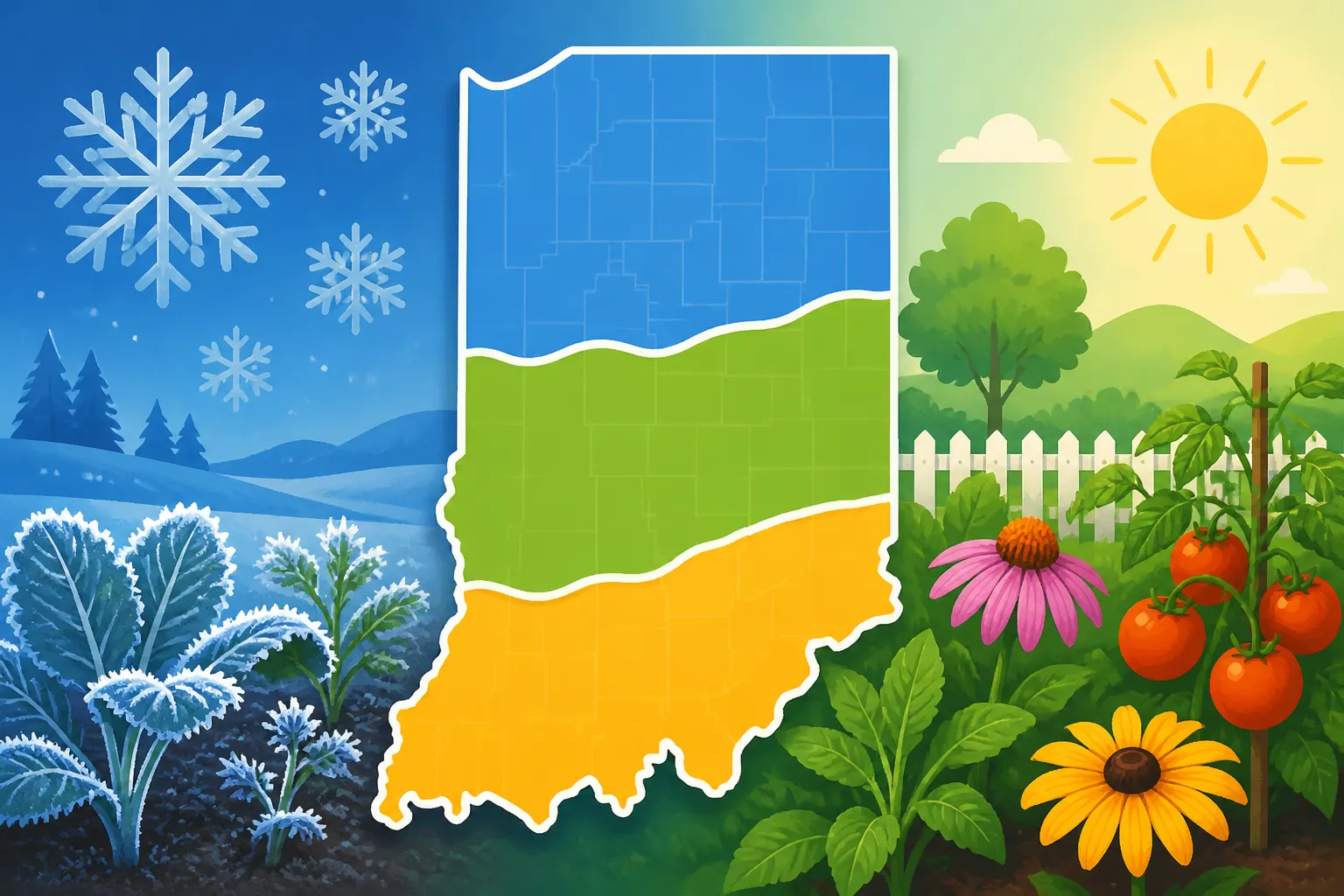
Indiana’s spring freeze timing varies by region. The station benchmarks below show a later normal last spring freeze in the north than in central and southern Indiana. They are useful for understanding that regional pattern, but each one applies to its named weather station rather than to every garden in the surrounding region.
According to NOAA National Centers for Environmental Information, at the South Bend Michiana Regional Airport weather station in Indiana, the 1991–2020 normal last spring freeze (32°F) at 50% probability is 05/01 (May 1).
According to NOAA National Centers for Environmental Information, at the Indianapolis weather station in Indiana, the 1991–2020 normal last spring freeze (32°F) at 50% probability is 04/15 (April 15).
According to NOAA National Centers for Environmental Information, at the Evansville Regional Airport weather station in Indiana, the 1991–2020 normal last spring freeze (32°F) at 50% probability is 04/04 (April 4).
Use these as regional reference points rather than as dates to copy directly onto a planting calendar. A gardener in northern Indiana might use the South Bend station as a broad comparison, while still checking forecasts and considering the garden’s own exposure. The same principle applies to central and southern Indiana: the Indianapolis and Evansville station figures are useful anchors, not guarantees for every town or yard.
A station-based date is especially helpful when you are comparing regional tendencies. It shows why a single statewide spring planting date can be misleading. Gardeners across Indiana may be ready for different crops at different times, and even neighbors can face different overnight conditions.
Frost benchmarks also do not tell you whether the soil is warm enough for a particular crop. Air temperature and soil temperature are related, but they are not interchangeable. A date that suggests a lower chance of freezing does not automatically mean that warm-season crops will thrive in cool, damp ground. For that distinction, see Why Hardiness Zones Do Not Set Indiana Vegetable Planting Dates and How Soil Temperature Changes Your Spring Planting Schedule.
Why your garden may not match the station
A weather station represents conditions at its measurement site. Your yard has its own small-scale climate, shaped by features that can influence how quickly it cools overnight and how exposed plants are to cold air. That is why a regional date is best used as a starting point, then adjusted through attention to your site and the forecast.
Cold-air drainage and low spots
On a clear, calm night, cold air can collect in low places. A garden at the bottom of a slope, beside a dip in the land, or in a sheltered hollow may be colder than a nearby site on higher ground. In a yard with uneven terrain, different beds may not have the same frost risk.
Watch where frost or cold damage tends to show up first. If one area repeatedly suffers while another remains less affected, that pattern can help you place vulnerable crops in a more favorable location or decide where to use protection. Cold Air in Low Spots: Spotting Indiana Garden Frost Pockets offers more detail on recognizing these colder pockets.
Exposure, buildings, and overhead cover
Wind exposure, nearby walls, paved surfaces, trees, and other structures can affect how a garden experiences a cold night. A wall may offer some shelter, while an open area may be more exposed. Overhead tree cover can also change how much heat escapes from the ground into the night sky. The effect depends on the site, so avoid assuming that one feature always makes a garden safer.
Consider these differences when comparing a forecast with conditions in your beds. A general forecast may describe a broad area, while a sheltered corner and an open, low bed can experience different conditions. If your planting decision is close, check the forecast for your location and use your own observations as context.
The plant’s stage and condition
The same cold night can affect plants differently depending on what they are and how they are growing. A newly planted transplant, a tender seedling, and an established cool-season crop are not interchangeable. The plant’s hardiness, recent growing conditions, and exposure all matter.
A plant raised indoors or in a protected space may also need time to adjust to outdoor conditions. Moving it outside does not make it immediately ready to handle a sudden cold snap. If the weather remains unsettled, keeping tender starts protected or delaying their move can reduce avoidable stress. See Chilly Spring Nights: Should You Plant or Keep Starts Inside? for help weighing that choice.
Using frost dates to plan spring planting
A good planting plan treats the regional date as one piece of information among several. The crop, the soil, the forecast, and your garden’s microclimate all play a part. Instead of trying to find one date that works for everything, group plants by their tolerance for cold and make decisions as conditions develop.
Separate cold-tolerant crops from tender crops
Some garden crops can cope with cool spring conditions better than heat-loving crops can. Others are vulnerable to frost and may stall or suffer when planted into cold conditions. Keep these groups separate in your plan so that an early opportunity for one type of crop does not push you into setting out tender plants too soon.
A regional freeze date is most useful when you already know how a crop responds to cold. Check the planting guidance for the crop and compare it with the forecast and site conditions. The regional benchmark can help you judge the season’s general progression, but the plant’s needs should guide the final decision. The Indiana Vegetable Planting Schedule: Purdue Extension Timelines is a useful companion for crop-specific planning.
Combine air forecasts with soil readiness
A forecast that shows no freeze risk does not guarantee that soil is ready for sowing or transplanting. Soil that remains cold and wet can slow establishment, and working it while it is too wet can also damage its structure. For direct-sown crops, pay attention to soil conditions as well as the forecast.
The relevant soil conditions vary by crop. Do not use one warm afternoon as proof that the whole bed has warmed enough. Shaded areas, raised beds, and heavy ground can warm and dry at different rates. A soil thermometer can help you assess the actual planting area, while a simple check of the soil’s moisture and texture can help you avoid working ground that is still too wet. For more detail, see Checking Soil Crumb Readiness Before Sowing Spring Crops and Using Soil Thermometers to Time Indiana Vegetable Planting.
Give transplants a gradual transition
Transplants started indoors or grown in a protected setting need to adjust to outdoor conditions before being left exposed. That adjustment is called hardening off. It reduces the shock of moving a plant from a stable environment into shifting outdoor light, wind, and temperatures.
Do not treat hardening off as a substitute for checking frost risk. A plant can be acclimated to outdoor conditions and still be vulnerable to freezing temperatures. If the forecast turns colder, keep tender plants protected and reassess before planting them in the garden. When to Sow Indoors and Harden Off Plants Across Indiana covers the transition in more detail.
Use a decision table, not a single planting date
This table summarizes how to use each kind of information when planning. It is not a substitute for crop-specific directions or the current forecast.
| What you are checking | What it helps you assess | How to use it |
|---|---|---|
| Regional station benchmark | Broad timing differences across Indiana | Use it as a planning reference, not a promise for your yard |
| Local forecast | The immediate risk of an upcoming cold night | Recheck before setting out vulnerable plants |
| Garden location | Whether a bed is exposed, sheltered, or prone to cold-air pooling | Adjust your expectations for each part of the yard |
| Crop tolerance | How sensitive the plant is to frost and cool conditions | Group crops by their needs rather than planting everything together |
| Soil condition | Whether the bed is workable and suitable for the crop | Check the ground itself instead of relying only on air temperatures |
| Transplant readiness | Whether indoor-grown plants have adjusted to outdoor conditions | Harden off plants and protect them if cold returns |
A flexible calendar can still be orderly. You can prepare beds, start seeds, and plan successive sowings without committing to a single outdoor planting day. When weather is uncertain, keep tender plants in a protected place and leave yourself room to shift plans. Direct Sowing vs. Transplanting: Making the Call in Indiana can help you decide which approach fits a crop and garden setup.
Reading forecasts and responding to a late frost
A normal date describes a long-term pattern; a forecast helps you make a near-term decision. When a cold night is possible, check the forecast again as the event approaches and consider how it applies to your garden location. A broad prediction may not capture a sheltered corner or a frost-prone low spot, so use local knowledge alongside the forecast.
Treat probability as a planning tool
The 50% probability attached to a normal freeze date is not a guarantee that freezing conditions will or will not occur on that date. It also does not describe the chance of frost at a particular garden bed. Think of it as a way to compare timing, not as an all-clear signal.
That distinction helps prevent two common mistakes. One is planting tender crops because a regional average date has passed, then assuming that frost is impossible. The other is delaying every crop until the safest possible conditions, even when some cool-season plants could have been planted earlier. Matching the crop to its tolerance can help you avoid both extremes.
A forecast has limits too. Temperature forecasts are estimates for an area and can change as conditions shift. If plants are already outdoors and a freeze is forecast, plan for the vulnerable crops first. If you have not yet planted, delaying tender transplants may be simpler than trying to protect them after planting.
Choose protection with the crop and conditions in mind
Protection can help reduce exposure to cold, but it should be appropriate to the plants and the expected weather. Covering a bed may shield plants from frost, while a poorly secured cover can become a problem in wind or press down on tender growth. Check how the cover is supported and whether it will stay in place.
A cover is not a guarantee that plants will avoid damage. Its effectiveness depends on the material, how it is installed, the weather, and the location. Make sure plants are not trapped under a cover longer than necessary, and follow product instructions where applicable. For practical considerations, see Spring Frost Protection Strategies for Indiana Fruit and Vegetables and Choosing Row Covers and Frost Blankets for Indiana Garden Beds.
It also helps to know the difference between a light frost and a harder freeze. Plant damage depends on more than a single forecast number: crop sensitivity, how long cold conditions last, wind, moisture, and the plant’s stage can all matter. A crop that tolerates a light frost may still be injured by more severe or prolonged cold. Light Frost vs. Hard Freeze: What Temperature Damages Indiana Crops? explains the distinction.
Avoid assuming that watering, covering, or moving a container will solve every cold-weather problem. The right response depends on the plant, the expected conditions, and the protection available. If conditions are uncertain, prioritize the most vulnerable plants and use reliable local forecasts and crop-specific guidance.
If frost catches you by surprise
After a cold night, wait until conditions improve before deciding that a plant is lost. Some damage may be visible right away; other symptoms can become clearer later. Resist removing damaged growth immediately if you cannot tell whether living tissue remains. A plant may recover, but recovery depends on its condition and the extent of injury.
Keep an eye on plants over the next stretch of suitable growing weather. Avoid adding stress through unnecessary handling or drastic pruning while you are still assessing damage. If a crop has been badly affected, use the experience to adjust the placement of future plantings or add a protection plan for the next forecasted cold spell.
Planning for different crops and garden setups
Regional frost dates are most useful when they support a plan that fits the crop. A calendar that lists one planting day for every vegetable overlooks differences in cold tolerance, soil needs, and the way plants are started. A better approach is to make a flexible plan for each crop group, then revise it as spring unfolds.
Cool-season crops
Cool-season crops generally fit earlier planting plans better than tender warm-season crops, but that does not mean every variety or planting method responds the same way. Direct sowing, setting out transplants, and growing in containers can each change how a crop experiences the weather.
Consider both the air forecast and whether your bed is workable. If the ground is saturated, cold, or compacted, waiting for better soil conditions may help even when a freeze is not expected. If you are planting seeds, the crop’s germination needs matter too. See When to Sow Cool-Season Vegetables in Indiana Spring Soil for more on choosing an appropriate window.
Tender, warm-season crops
Heat-loving crops are more exposed to cold stress than many cool-season vegetables. For these plants, a regional frost date should not be the only test. Check the crop’s temperature needs, look at the forecast, and confirm that the soil has warmed enough for establishment.
If spring weather turns warm for a short spell, it can be tempting to move tender plants outside early. A return to chilly nights can slow growth or damage plants, and cold soil can make establishment harder. Holding transplants in a protected space until conditions are suitable may be a better trade-off than taking advantage of a brief warm period. Why Early Spring Warm Spells Can Trap Indiana Gardeners explores this risk.
Containers and small gardens
Containers can be moved or grouped more easily than in-ground beds, which offers some flexibility when temperatures dip. But pots can also cool quickly, and exposed containers may experience conditions that differ from a protected garden bed. Consider where the container sits, how much shelter it has, and whether you can move it if a cold night is forecast.
In a small garden, planting in stages can reduce the risk of losing an entire crop to one cold event. Keep some plants protected while setting out others when conditions suit them. That way, a change in the forecast does not force every planting decision at once.
Fruit crops and ornamental beds
Vegetables are not the only plants affected by spring freezes. Fruit trees, flowering shrubs, and other ornamentals can be vulnerable when buds or new growth are exposed to cold. Their risk depends on the plant and its stage, so use plant-specific guidance rather than assuming that the vegetable planting calendar applies.
For established landscape plants, the frost-date benchmarks can help frame the season, but they do not predict the condition of buds in your yard or guarantee that flowers will avoid a cold snap. Check guidance for the particular plant, especially if it is valuable or newly planted. For vegetable and fruit protection strategies, Spring Frost Protection Strategies for Indiana Fruit and Vegetables provides related advice.
A productive planting calendar should help you act without making you feel locked into a date. Note which parts of the garden tend to cool first, keep track of forecast changes, and prioritize crops by their sensitivity. That approach turns regional frost data into practical decisions instead of a one-size-fits-all rule.
Frequently Asked Questions
Does a 50% last spring freeze date mean frost is impossible afterward?
No. It is a probability-based normal, not a guarantee. Freezing conditions can still occur after the benchmark, so check the forecast before planting or leaving tender plants exposed.
Should I plant everything after the regional date?
No. Crops differ in their tolerance for cool conditions, and soil readiness matters too. Use crop-specific planting guidance, your local forecast, and the condition of your garden rather than one date for every plant.
Why might my yard get frost when the station area does not?
A station is a regional reference, while your yard has its own exposure and terrain. Low spots, open areas, shelter, and nearby structures can all contribute to different conditions. Your garden may not match the station’s readings.
Can I use a regional freeze date to decide when soil is warm enough?
Not by itself. A freeze date concerns air-temperature conditions at a station; it does not measure your garden soil. Check soil conditions and the crop’s needs separately.
Sources
- NOAA National Centers for Environmental Information — NOAA NCEI 1991–2020 Climate Normals — South Bend Michiana Regional Airport, Indiana (checked November 14, 2026)
- NOAA National Centers for Environmental Information — NOAA NCEI 1991–2020 Climate Normals — Indianapolis, Indiana (checked November 14, 2026)
- NOAA National Centers for Environmental Information — NOAA NCEI 1991–2020 Climate Normals — Evansville Regional Airport, Indiana (checked November 14, 2026)
Disclaimer
This article is for general informational purposes only and does not constitute professional advice. Laws, prices and regulations vary by location and change over time. Consult a qualified professional for guidance on your specific situation. Indiana Gardening Guide is not a government agency and is not affiliated with any university extension, state department of agriculture or other government agency.